Do you struggle to separate wet, fine materials efficiently, facing constant mesh blockages and disappointing performance in dewatering? Picking the right vibrating screen is the key to solving these pains.
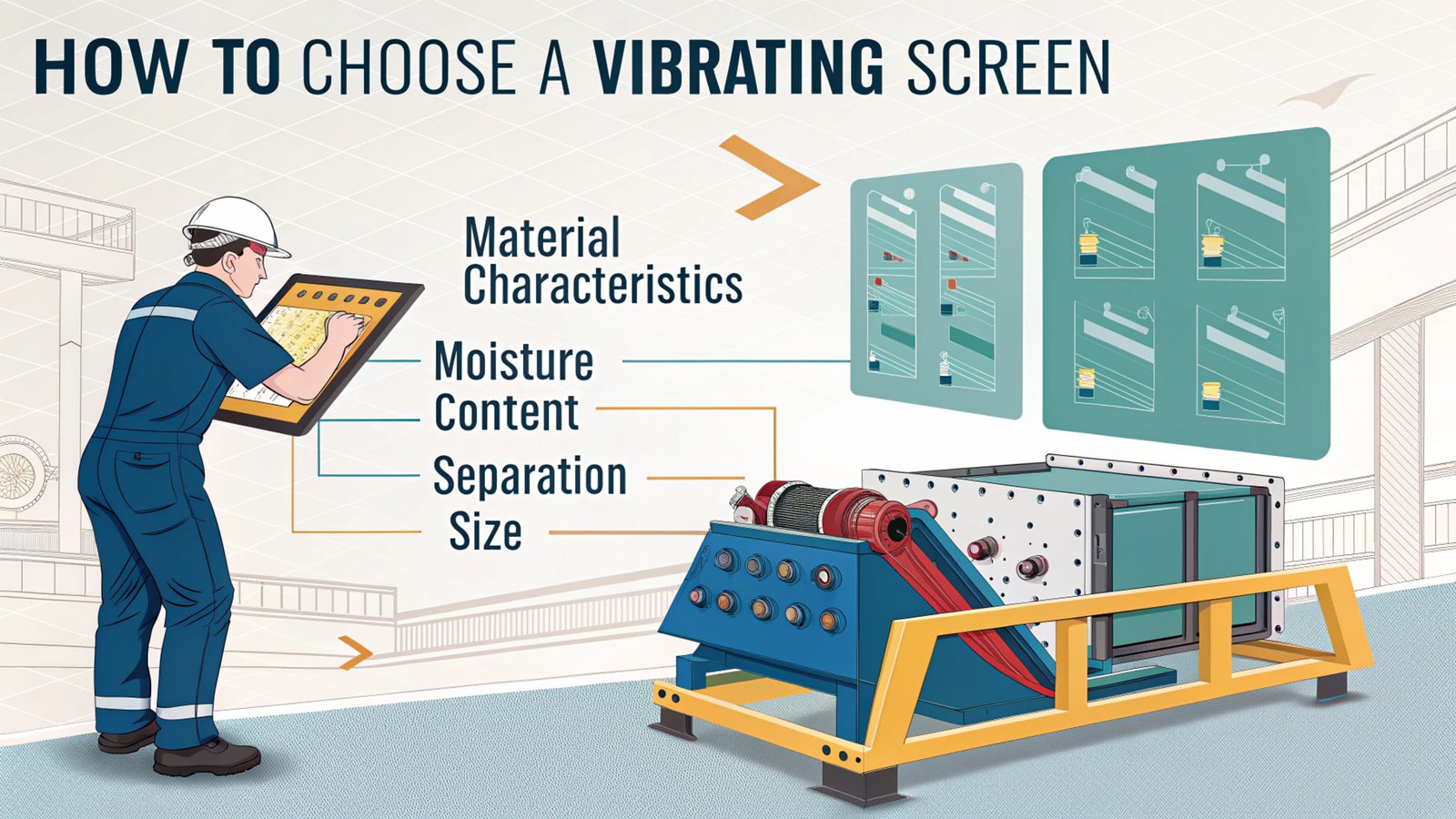
The best vibrating screen depends on three things: material characteristics, moisture content, and the size you want to separate. You must match the screen type and parameters to your specific process needs for maximum results.
When I first got into mining, I was surprised by how much difference the right vibrating screen could make. I kept seeing the same three common problems: screens clogging easily, fine particles slipping through, and machines struggling to remove water. At first, I thought the solution was to use tougher mesh or stronger vibration. Over time, though, I realized the secret is much more precise—knowing your material and matching it with the right screen type, size, and vibration settings. If you’re serious about improving your process, let’s break down the options and decisions.
How many types of vibrating screens are there?
Do different screens help with different material and moisture challenges, or do all vibrating screens work the same?
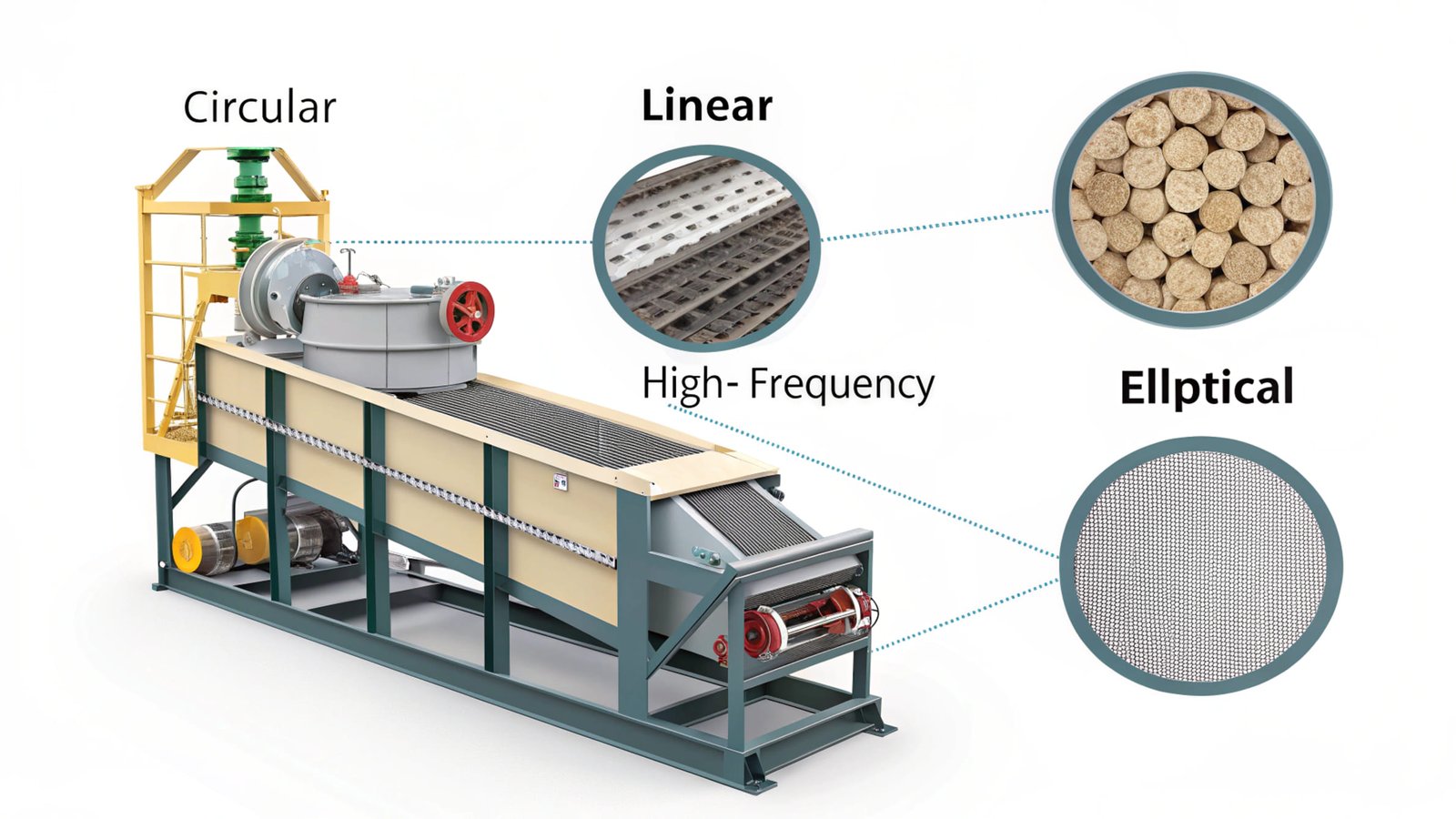
There are four main vibrating screen types: circular, linear, high-frequency, and elliptical. Each works best with specific materials and applications.
 "Types of Vibrating Screens")
In my early job days, I visited several mineral plants and noticed that most used circular and linear screens for basic sorting. Circular screens use a motor with an unbalanced weight, creating a circular motion that’s good for coarse, dry materials. Linear screens create straight motion and are used for finer, wet, or sticky materials. High-frequency screens run at higher vibrations and are perfect for dewatering fine particles—these are commonly lined with special wear plates like polyurethane. Elliptical screens combine features for special cases, like where both capacity and precise separation are needed.
Here’s a simple breakdown:
| Type | Motion | Best for | Typical Use |
|---|---|---|---|
| Circular | Orbital | Coarse, dry aggregates | Quarries, sand |
| Linear | Straight | Wet/sticky, finer particles | Mining, coal |
| High-Frequency | Rapid | Ultra-fine particles, dewatering | Minerals, tailings |
| Elliptical | Mixed | Variable particle sizes, difficult feeds | Specialty processing |
In China, coastal manufacturers have refined the use of high-frequency screens with wear-resistant polyurethane panels, solving sticky fine material challenges especially in dewatering. For your project, picking one depends on the feed material and process needs.
What are the different types of aggregate screens?
Are all aggregate screens the same, or does each type offer something unique?
Aggregate screens come as vibrating screens, stationary bar screens, trommel screens, and grizzly screens. Each excels for particular feed sizes and material moisture.
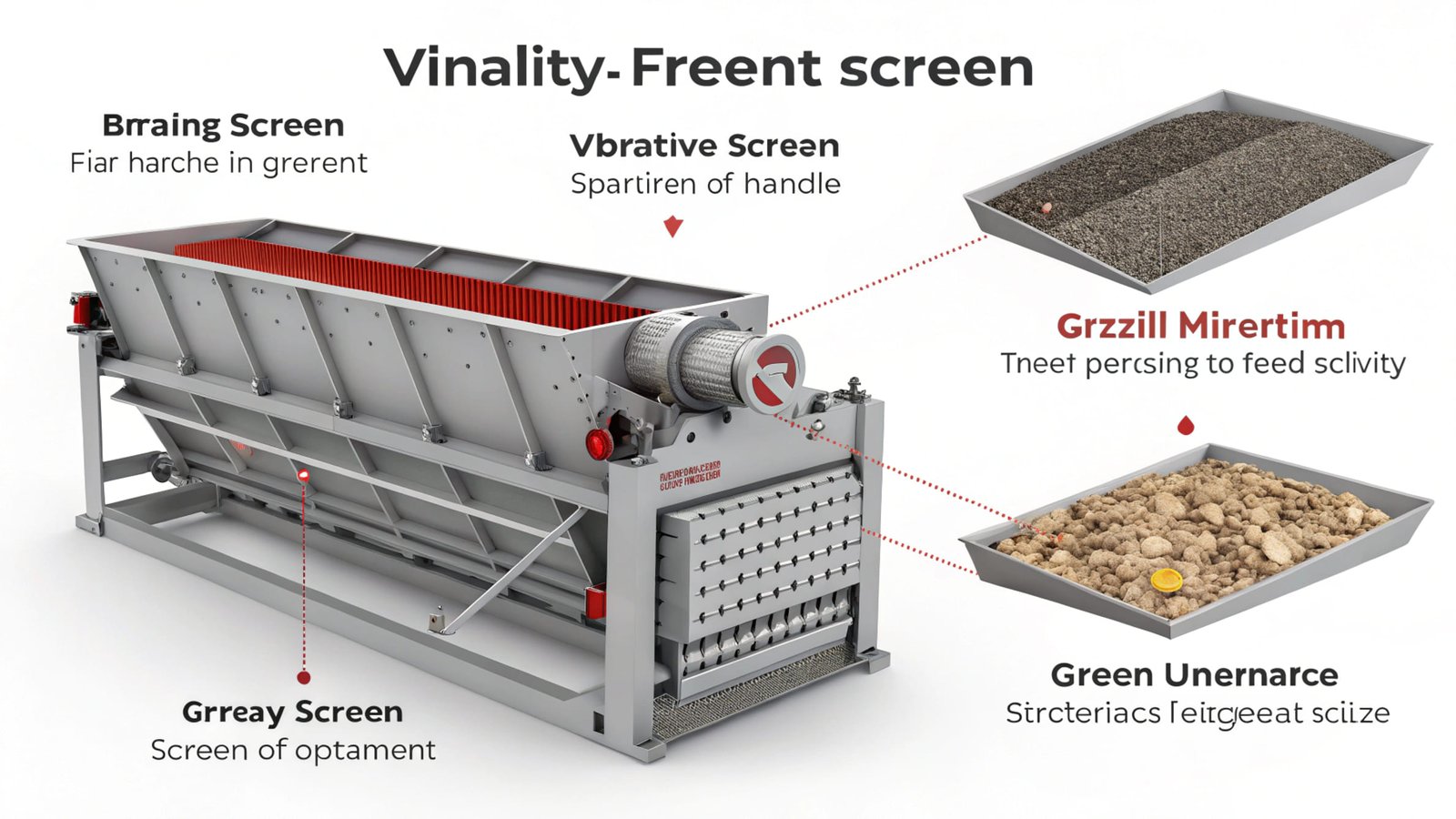
Long ago, I puzzled over which screen to use for gravel, sand, or crushed stone. Vibrating screens are the most versatile, handling everything from wet coal to dry rocks. Trommel screens look like rotating drums—great for sticky soil and high moisture. Stationary bar (or grizzly) screens are simply heavy bars, filtering out huge boulders before material hits a vibrating screen. Some plants even use banana screens—a curved version of a linear screen for higher capacities.
Let’s summarize:
| Aggregate Screen Type | How it Works | Use Case |
|---|---|---|
| Vibrating Screen | Vibration separates | Most aggregate, fine & coarse |
| Trommel Screen | Rotating drum tumbles | Sticky, wet, large lumps |
| Grizzly Screen | Static bars filter | Primary rock sorting |
| Banana Screen | Curved, linear motion | High capacity, fine |
The right aggregate screen is more than a matter of preference—it is about efficiency, reliability, and keeping up with production goals.
How to size a vibrating screen?
Does screen size choice actually change performance, or can you just use any standard size and expect good results?
You must size the vibrating screen based on feed particle size, throughput (tons per hour), and target separation accuracy. Screen opening, deck dimensions, and vibration frequency all matter for final performance.
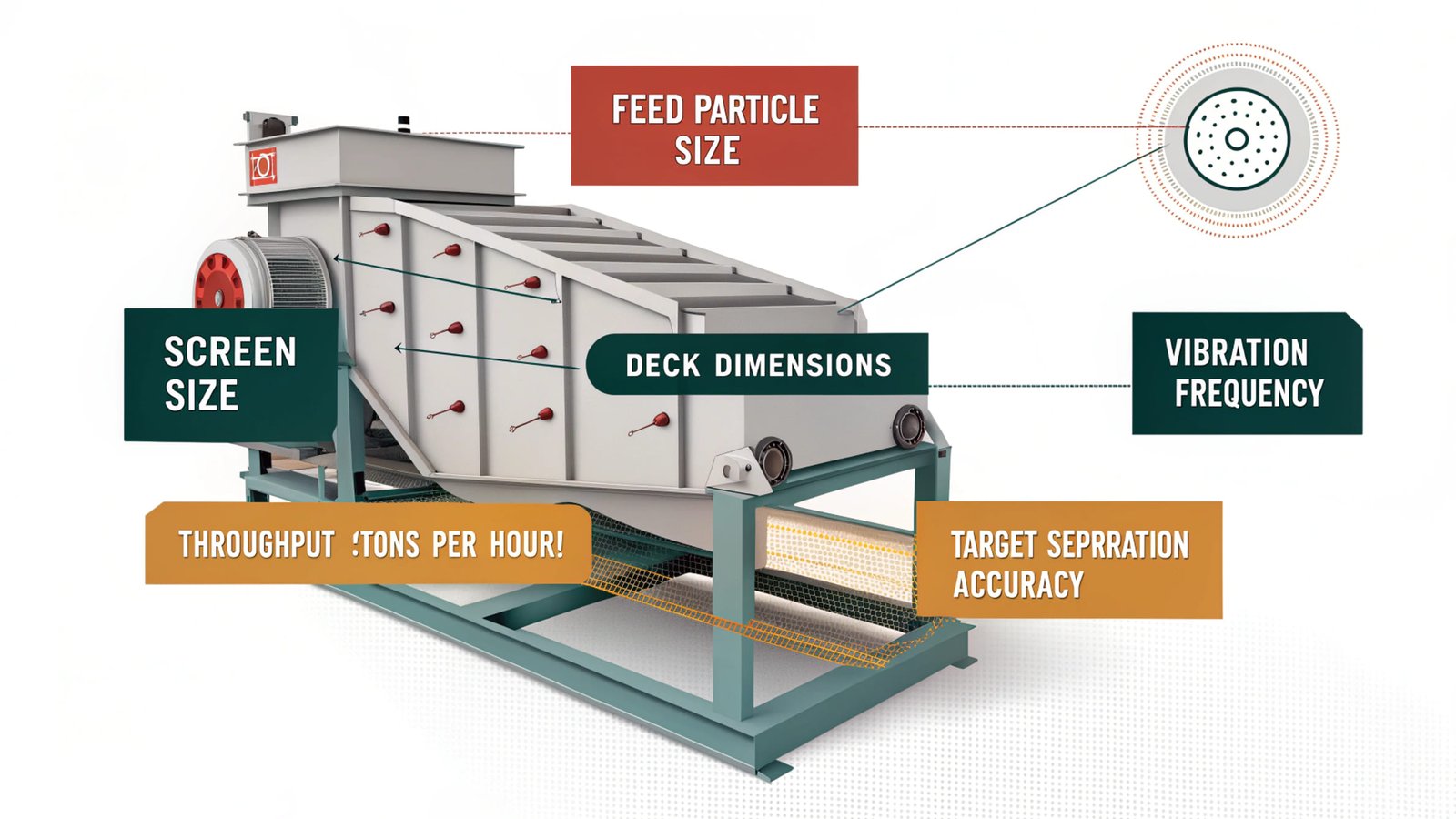
When I helped design a custom dewatering screen[^1] for a gold mine[^2] tailing project, I saw firsthand how sizing impacts every outcome. The clay-rich ore overflowed standard screens, causing blockages and poor water removal. So, we recalculated the screen area needed to ensure thin, speedy travel over the deck, while vibration frequency[^3] matched the clay’s sticky texture.
Here’s a basic sizing method:
- Determine Feed Size Distribution[^4]: Use a sieve analysis[^5].
- Estimate Capacity Needs: Match tons per hour to deck size.
- Choose Opening Size[^6]: Pick based on smallest desired product.
- Factor in Moisture & Stickiness: Increase deck/screen area for sticky, wet feeds.
- Select Vibration Frequency: High frequencies capture fines, but risk build-up with clays unless adjusted.
For example, in my polyurethane dewatering screen[^1] project, I ended up using smaller apertures and a higher frequency. A surprise “mud film” even helped catch fine particles, improving the water/clay balance—performance improved by actual results, not just theory.
[^1]: Explore this link to understand how dewatering screens enhance efficiency and resource recovery in gold mining operations. [^2]: Explore this link to discover expert insights on optimizing dewatering screens specifically for gold mining, enhancing efficiency and performance. [^3]: Understanding vibration frequency is crucial for optimizing dewatering processes, enhancing efficiency, and preventing blockages. [^4]: Understanding feed size distribution is crucial for optimizing screening processes and improving efficiency in mineral processing. [^5]: This resource will provide you with detailed methods and insights on conducting sieve analysis, crucial for material processing. [^6]: Understanding the factors influencing opening size can enhance your dewatering screen's efficiency and performance.
How to design a vibrating screen?
Is vibrating screen design just about the frame and mesh, or are there technical details that really change the outcome?
Designing a vibrating screen means choosing the right mesh and frame, but optimizing material flow, vibration parameters, and wear resistance matters even more.
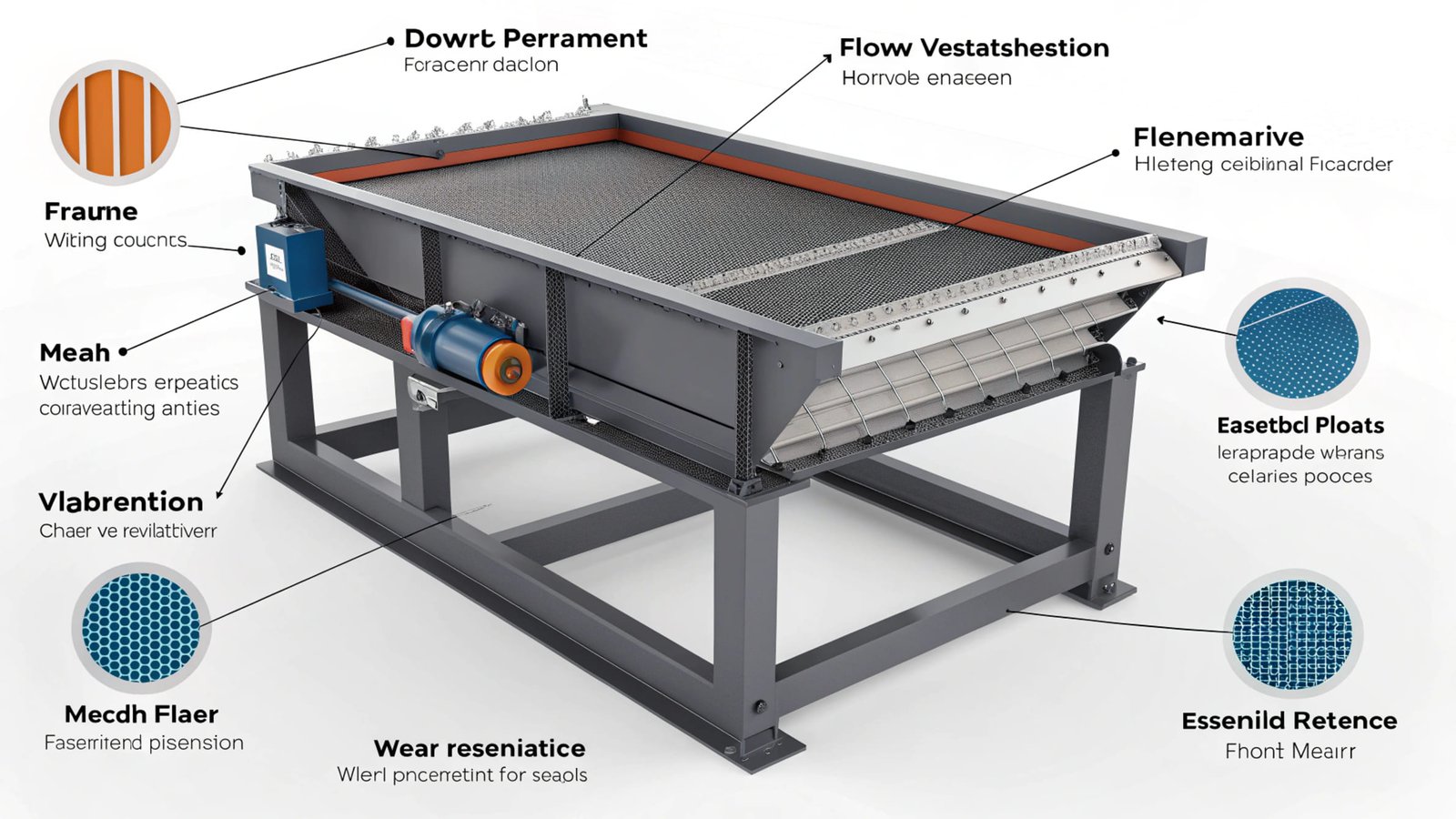
Recently, working with a client, I noticed that switching mesh material and adjusting slope gave big results. I made a prototype with polyurethane mesh and set the frame angle steeper. The high-frequency drive was tuned to keep even sticky ores moving, not lodging on the deck. It took several test runs—always checking actual water retention and material balance.
When designing, I always consider these points:
| Stage | Decision | Purpose |
|---|---|---|
| Mesh selection | Polyurethane, steel | Wear resistance, accuracy |
| Frame design | Slope, thickness | Material spread, strength |
| Vibration parameters | Frequency, amplitude | Material movement, anti-clogging |
| Water management | Dewatering system | Enhance drainage, recovery |
Don’t be afraid to test your assumptions. As I learned, surprises like a thin clay film can turn a potential weakness into a strength if you watch the actual process and adjust.
How do you determine the correct screen size?
Is picking the correct screen size difficult, or are there reliable steps for finding the best fit for your process?
To get the correct screen size, perform a particle size analysis, set quality targets, and match these with industry tables that show what mesh size gives the desired separation.
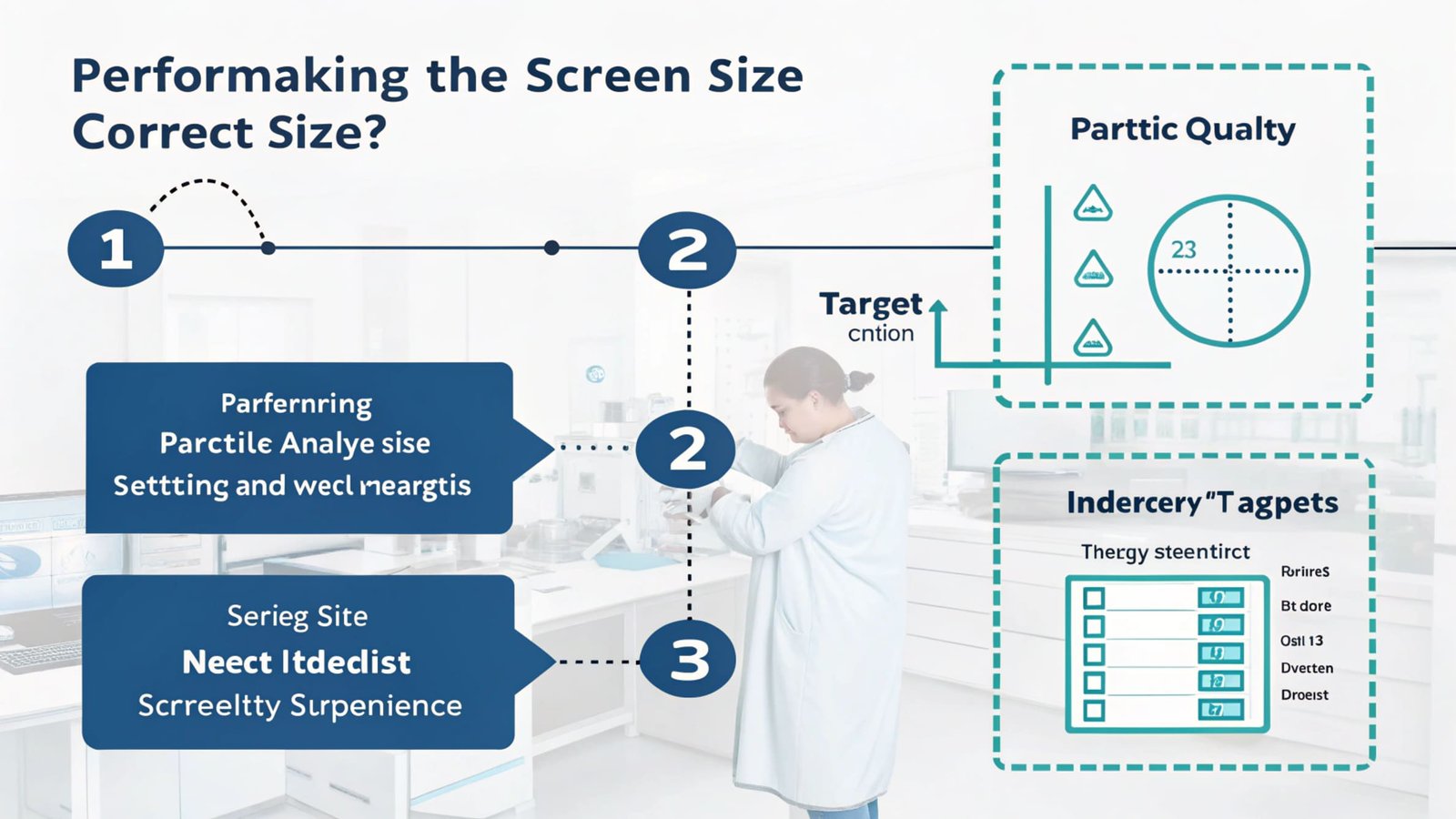
It took me many years to stop guessing and trust data. Today, when I sit with clients, we sift samples and do laboratory sizing, checking the flour-like powder and gritty sand alike. I rely on simple tables for common aggregate specs, but always test the final mesh before full installation. Here’s my quick checklist:
- Run a sieve analysis on your feed.
- Decide on cut-off sizes for your products.
- Use manufacturer charts to pick initial mesh sizes.
- Test at pilot scale, adjust for real feed conditions.
This method works best when you’re dealing with sticky or high-moisture feeds. Always double-check how the screen performs in action. Sometimes, as with my gold mine client, actual use brings up unexpected benefits.
How do I determine my screen size?
Can you figure out your vibrating screen needs without special tools, or do you always need advanced lab tests?
You can estimate the screen size by collecting a small sample of your feed, using a hand sieve or mesh set, and measuring how much material passes through each aperture.
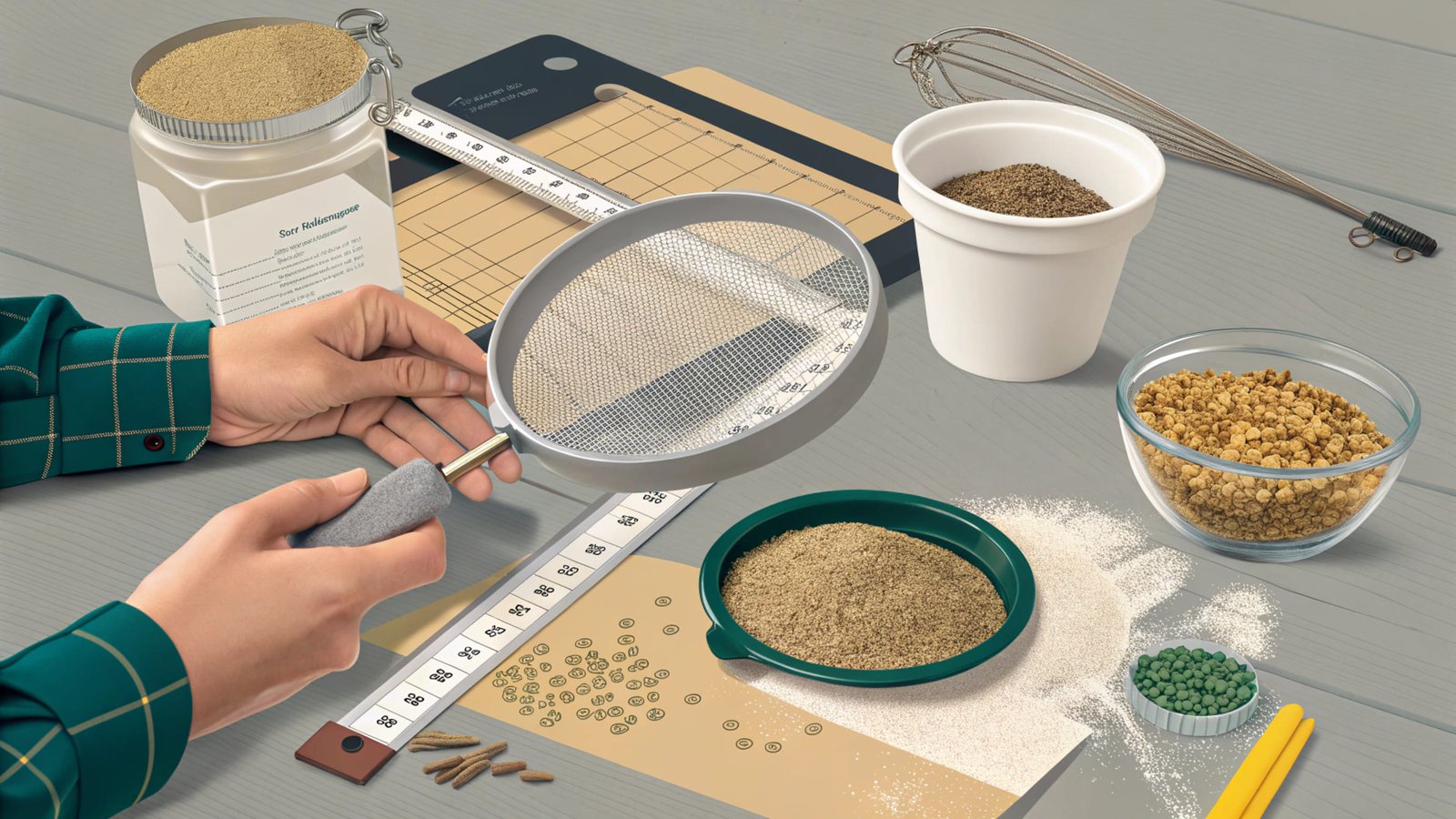
When I first started, I used nothing but a set of hand screens and a kitchen scale. For most jobs, this is all you need for a rough estimate, especially if you know your largest and smallest product requirements. Record the weight retained by each mesh, plot your data (even a quick sketch), and check manufacturer charts for the nearest match. For higher accuracy or sticky, wet feeds, always test in real conditions before ordering your screen.
Conclusion
Choosing a vibrating screen means matching material, moisture, and mesh—test, measure, and refine until you find the best performance.