
A vibration exciter—also known as a shaker—is a critical device designed to generate controlled mechanical vibrations for testing, material handling, and industrial processes-26. These specialized systems convert electrical, hydraulic, or mechanical energy into precisely controlled oscillatory motion, enabling engineers and manufacturers to validate product durability, simulate real-world conditions, and optimize material processing operations-2.
What Is a Vibration Exciter?
At its core, a vibration exciter is a device that generates mechanical vibrations through various transduction mechanisms. The most common type, the electrodynamic shaker, operates on electromagnetic principles—using a voice coil within a magnetic field to produce precisely controlled vibration across wide frequency ranges-1–. The mode of function of an electrodynamic shaker corresponds to that of a loudspeaker: vibration is generated by the interaction of electric current passing through the coil and a magnetic field–.
Vibration exciters are essential tools across multiple industries because they allow products and structures to be tested under controlled vibration conditions before they are deployed in the field-2. This proactive approach to quality assurance helps identify potential failure mechanisms early, reducing costly recalls and ensuring safety and reliability–.
Types of Vibration Exciters
Understanding the different types of vibration exciters is essential for selecting the right equipment for specific applications-1. The main categories include:
Electrodynamic Shakers represent the most widely purchased vibration test equipment for laboratory and production testing-1. They offer wide frequency coverage (typically 2 Hz to 2000 Hz or higher), precise amplitude control, and clean reproducible test waveforms-1. These systems are ideal for sine vibration testing, random vibration applications, and shock waveform generation-1.
Hydraulic Shakers use hydraulic actuators to generate vibration forces, excelling in applications requiring very large displacements or extremely high force levels at low frequencies-1. They are commonly used for large displacement testing of structures, bridges, automotive suspension components, and seismic simulation-1.
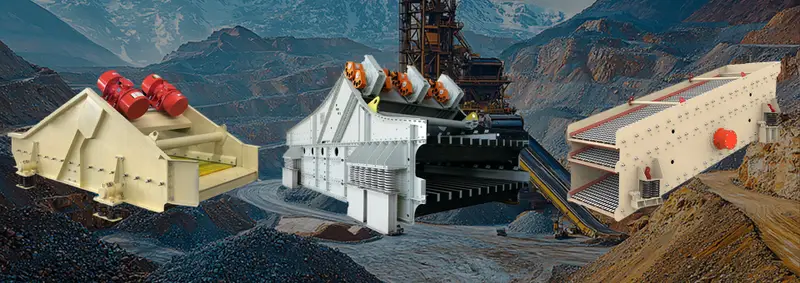
Mechanical Vibration Exciters rely on rotating eccentric masses to generate vibration–. These are often found in industrial vibrating screens, feeders, and compactors-26. Inertial exciters—including uniaxial and biaxial configurations—are widely used in mining, construction, and material processing applications-26.
Piezoelectric Exciters use piezoelectric materials that deform when an electrical voltage is applied, generating precise high-frequency vibrations–. These are particularly suitable for applications requiring high-frequency excitation with minimal weight and compact form factors–.
Pneumatic Exciters use compressed air to generate vibration forces, often employed in applications where electrical or hydraulic power is impractical.
Key Applications Across Industries
Vibration exciters serve a diverse range of applications across virtually every industrial sector.
In aerospace and defense, vibration testing systems are used to assess the durability and performance of components and assemblies under realistic environmental conditions-2. Electrodynamic shakers simulate the vibration profiles that aircraft, satellites, and military equipment will encounter during their operational lifecycle-1.
The automotive industry relies heavily on vibration exciters for component testing, NVH (Noise, Vibration, and Harshness) analysis, and durability validation–. From suspension components to electronic control units, vibration testing ensures that every part can withstand the rigors of the road.
In mining and construction, vibration exciters are critical components of vibrating screens used for material grading and classification-31. The exciter determines the screen’s amplitude, frequency, and overall vibration pattern, directly affecting screening accuracy, material throughput, and equipment stability-31. Heavy-duty mining operations require exciters with larger centrifugal force and higher power-31.
Electronics and consumer goods manufacturers use vibration exciters to test product reliability during shipping and handling–. Shock test systems generate high-amplitude, short-duration pulses to simulate impacts, drops, and crash scenarios-1.
Research institutions employ vibration exciters for experimental modal analysis, structural dynamics testing, and calibration of sensors and measurement instruments–.
How to Select the Right Vibration Exciter
Selecting the appropriate vibration exciter requires careful evaluation of multiple factors-1. Here are the key considerations:
Force Rating is the most important specification-1. Required peak force is roughly the product of total moving mass (DUT plus fixture plus armature) and required peak acceleration, with margin for amplifier headroom and resonance-4. A common practice is to add a 30–50% safety margin for amplifier headroom, line voltage variability, and resonance peaks-4.
Frequency Range determines which tests can be performed. Low-frequency tests are often limited by stroke (displacement) rather than force-4. High-frequency applications may require specialized shakers capable of operating up to 40 kHz-2.
Total Moving Mass includes the DUT mass, fixture mass, and the shaker’s armature moving mass-4. Under-sizing a shaker means it cannot reach required levels; over-sizing introduces too much mass and stiffness change for clean modal data-4.
Environmental Conditions such as dust levels, moisture, temperature, and corrosion should be considered when selecting exciters for industrial applications-31. Sealed housing and anti-dust design are essential for harsh environments.
Maintenance and Performance Optimization
A high-quality exciter ensures stable performance, reduced maintenance costs, and improved product quality–. Proper maintenance is essential for maximizing exciter lifespan and maintaining consistent vibration output.
Key maintenance practices include regular inspection of bearings, shafts, and housings; ensuring proper lubrication; and monitoring for unusual noise or vibration patterns that may indicate impending failure-28. Heavy-duty spherical or cylindrical roller bearings are commonly used in industrial exciters and require periodic inspection and replacement-28.
Market Trends and Future Outlook
The vibration measurement exciters market is poised for steady growth, fueled by heightened demand across automotive, aerospace, civil engineering, electronics, and research sectors-37. Increasing product complexity and shortened development timelines are motivating organizations to invest in exciter technologies that enable faster and more comprehensive testing cycles-37.
Exciter technologies have transitioned from basic mechanical devices to advanced electrodynamic and piezoelectric systems offering unmatched precision in testing environments-37. The adoption of Industry 4.0 principles is enabling greater interoperability, with organizations shifting toward automated and digitally connected testing operations-37. The global modal shaker and exciter market is projected to grow at a CAGR of 6.3% from 2025 to 2035–.
Conclusion
Vibration exciters are indispensable tools that bridge the gap between design and real-world performance. Whether you are testing aerospace components, screening aggregates in a quarry, or validating consumer electronics, selecting the right exciter—and maintaining it properly—is essential for achieving reliable results and long-term success-4. As industries continue to demand higher quality, greater reliability, and faster time-to-market, the role of vibration exciters in quality assurance and product development will only grow more critical.