
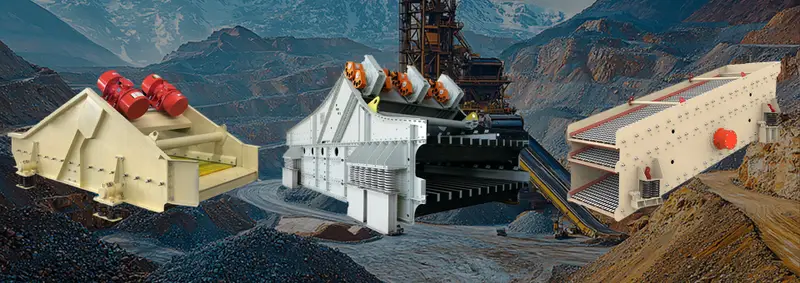
Fixing a vibrating screen requires systematic troubleshooting and maintenance. Here’s a structured approach to diagnose and repair common issues:
1. Problem Identification & Safety Precautions
- Lock out/tag out (LOTO) the power supply before inspection.
- Check for abnormal noise, reduced efficiency, or physical damage.
2. Common Issues & Solutions
A. Screen Mesh Damage
- Symptoms: Material bypass, torn wires, or distorted panels.
- Fix:
- Replace damaged mesh (ensure correct aperture size and material grade).
- For polyurethane panels, check tensioning bolts (recommended torque: 20–30 Nm).
B. Excessive Vibration/Instability
- Causes: Unbalanced exciter, broken springs, or loose bolts.
- Fix:
- Rebalance eccentric weights (adjust counterweights symmetrically).
- Replace broken isolation springs (rubber/steel) and tighten foundation bolts.
C. Bearing Overheating/Failure
- Symptoms: Temperature >70°C, grinding noise.
- Fix:
- Lubricate bearings with high-temperature grease (e.g., Mobilith SHC 460).
- Check shaft alignment and replace bearings if worn (typical lifespan: 6–12 months under heavy load).
D. Motor Malfunction
- Tests:
- Measure voltage/current (3-phase motors should show <5% imbalance).
- Inspect couplings and V-belts for wear.
- Fix:
- Tighten loose connections or replace damaged windings.
3. Structural Repairs
- Cracked Welds: Grind and re-weld using low-hydrogen electrodes.
- Frame Deformation: Reinforce with steel plates or realign using hydraulic presses.
4. Post-Repair Checks
- Run empty for 10–15 mins to verify smooth operation.
- Measure vibration amplitude (should match manufacturer specs, e.g., 4–6 mm for linear screens).
- Conduct sieve analysis to confirm screening efficiency.
Preventive Maintenance Schedule
Pro Tip: Keep a log of vibration readings (use a portable vibrometer) to predict failures.
Need help with a specific brand/model? Provide details for tailored advice!