The key differences between screeners (screening plants) and crushers (crushing equipment) lie in their function, mechanism, and output. Here’s a clear breakdown:
Core Functions
| Screener | Crusher |
|---|---|
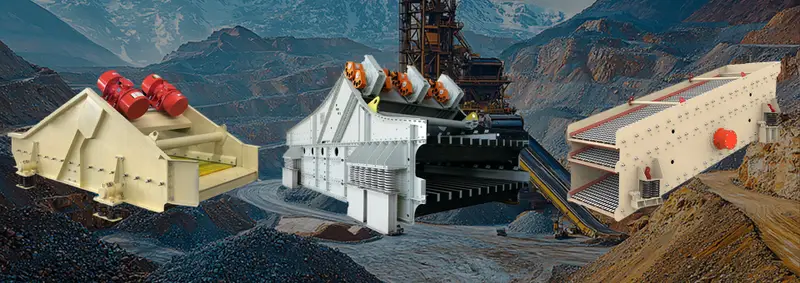
| Sorts/Separates material by size using meshes/screens. | Breaks down large rocks/aggregates into smaller pieces. |
| Does not change material size—only classifies it. | Actively reduces material size through mechanical force. |
| Output: Multiple size fractions (e.g., 0-5mm, 5-20mm, 20-40mm). | Output: Smaller, uniformly crushed material (e.g., converting 500mm rocks to 50mm). |
How They Work
| Screener | Crusher |
|---|---|
| Mechanism: Vibrating screens, rotating drums (trommels), or grizzly bars. Material flows over screens; smaller particles fall through, larger ones move to the end. | Mechanism: Applies force (compression, impact, or shear) via: – Jaw crushers (compression) – Cone crushers (compression) – Impact crushers (hammers/blow bars) |
| Motion: Shaking, gyrating, or tumbling. | Motion: Fixed plates/movable jaws, rotating cones, or high-speed rotors. |
Key Applications
| Screener | Crusher |
|---|---|
| – Sorting raw material before crushing – Grading final products (e.g., sand/gravel for construction) – Removing fines or contaminants – Recycling (e.g., separating metals from debris) |
– Primary crushing (breaking blasted rock) – Secondary/tertiary crushing (further size reduction) – Recycling (crushing concrete/bricks) – Producing aggregates for asphalt/concrete |
Visual Analogy
Imagine a crusher as a “chewing machine” that breaks big chunks into smaller bits.
A screener acts like a “colander” that sorts those bits into sizes.
Together, they work like a sandwich: Crusher → Screener → (Optional) Crusher → Final Screener.
Practical Differences
| Aspect | Screener | Crusher |
|---|---|---|
| Wear Parts | Mesh screens, deck panels | Jaws, liners, blow bars |
| Noise/Dust | Lower noise, dust controlled | Higher noise, more dust |
| Power Use | Lower energy consumption | High energy demand |
| Output Control | Adjust screen mesh sizes | Adjust crusher settings (gap size, speed) |
Why the Difference Matters
- Efficiency: Screeners prevent oversized material from entering crushers, protecting them.
- Product Quality: Screeners ensure final products meet size specifications (e.g., ASTM standards for concrete).
- Cost Savings: Using a screener first reduces crusher wear and optimizes throughput.
Example Workflow:
Raw rock → Jaw crusher (crush to 150mm) → Screener (remove <30mm aggregate) → Cone crusher (further crush >30mm rocks) → Final screener (sort into 5-10mm, 10-20mm, etc.).
In Summary
| Screener | Crusher |
|---|---|
| “Sorter” | “Breaker” |
| Separates by size | Reduces size |
| Output: Graded fractions | Output: Smaller particles |
Both are essential in aggregate processing, mining, and recycling—often used together in a single plant. Let me know if you’d like examples of specific machines (e.g., trommel vs. jaw crusher)! 🚜💥